
The Role of Shade in Contemporary Architecture
In contemporary architecture, shade is no longer understood as a purely functional element. It is not simply a response to heat or sun exposure, but an essential part of how space is designed, experienced, and perceived.
Shade influences comfort, movement, atmosphere, and the relationship between architecture and landscape, it defines how people inhabit outdoor spaces and how those spaces evolve throughout the day. As architecture becomes increasingly focused on wellbeing, sustainability, and spatial quality, shade becomes more central.
Traditionally, shading solutions were introduced to solve a practical problem: protection from direct sunlight. Pergolas, parasols, and canopies were often treated as secondary additions. useful, but separate from the architectural concept.
Today, this approach is no longer enough. In high-quality residential, hospitality, and public projects, shade needs to be considered from the beginning. It should not be something added later, but something that helps define the space itself.
Shade creates rhythm, establishes boundaries without enclosure and allows openness while still offering comfort. In this sense, shade becomes architecture.
Light, Shadow and Experience
Architecture is not only built with material, it is also built with light. The way sunlight enters a space, how shadows move across surfaces, and how brightness changes throughout the day all contribute to the emotional experience of a place. A well-designed shaded space does not remove light completely, Instead, it filters and shapes it.
This creates what can be called luminous comfort, a condition where protection and openness exist at the same time. Rather than creating darkness, good shade preserves connection with the sky, the landscape, and the natural rhythm of the day. This is particularly important in outdoor environments such as terraces, pools, gardens, and hospitality spaces.
Shade and Climate Responsiveness
Climate is changing the way architects think about exterior design. Rising temperatures, stronger sun exposure, and the increasing importance of energy efficiency mean that outdoor comfort can no longer be improvised. Shade plays a critical role in passive environmental control, it helps reduce heat gain, improves usability of outdoor areas, and contributes to thermal comfort without depending entirely on mechanical systems.
For hotels, resorts, and private residences, this becomes both a design and operational advantage. Well-designed shaded spaces are used more often, for longer periods, and with greater perceived value.
Standard Solutions
Many conventional shading systems fail because they are treated as products, not architectural elements. Standard pergolas and parasols often create visual disruption:
- They interrupt the design language
- They feel disconnected from the project
- They introduce unnecessary visual weight
- They reduce spatial coherence
For architects working on bespoke or high-end projects, this is a major limitation.
Solar Integration
Integrating solar technology often creates tension between performance and aesthetics. Visible panels, technical additions, and poorly integrated energy systems can undermine the visual clarity of a project, the challenge is not whether to integrate solar, but how.
Contemporary architecture increasingly demands solutions where energy generation is part of the design language, not an external technical layer. Solar canopies and integrated shading systems allow this balance combining environmental responsibility with architectural quality.

The ALTA LUMA Perspective
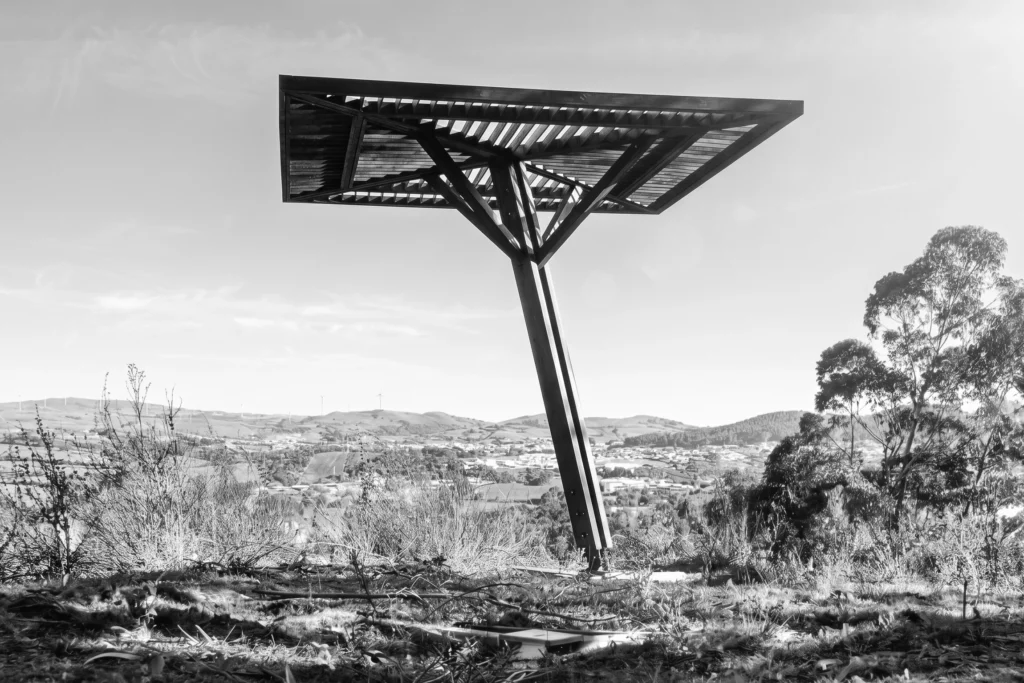
At ALTA LUMA, shade is approached as part of architecture, not as an accessory. The aim is not simply to provide cover, but to create spatial quality through light, proportion, and integration.
This means:
- Canopies that filter light instead of blocking it
- Structures designed for each specific context
- Solar integration without visual intrusion
- Outdoor spaces that feel open, calm, and intentional
The result is not conventional shade, but a more refined relationship between people, architecture, and landscape. The role of shade in contemporary architecture goes far beyond protection from the sun. It affects how people move, rest, connect, and experience space. It contributes to sustainability, defines atmosphere, and reinforces architectural identity. When treated as part of the design process, shade becomes more than a technical solution, it becomes a fundamental architectural tool.self.