
Why Guests Spend More Time in Well-Designed Outdoor Areas
In hospitality, outdoor spaces are no longer secondary. Terraces, pool areas, gardens, rooftops, and lounge spaces have become some of the most valuable parts of a hotel or resort experience. In many cases, they are the spaces guests remember most.
They influence how long guests stay, how they move through the property, and how they perceive the overall quality of the experience. The difference is rarely just the view, it is the design.
Outdoor Space as a Part of the Guest Experience
Guests do not separate architecture from experience. They may not analyse proportions, materials, or spatial flow, but they feel them.
A well-designed outdoor area creates comfort without effort. It feels intuitive, calm, and naturally inviting. People stay longer in places where they feel good. This applies especially to hospitality, where comfort is not only functional, it is emotional.
A shaded terrace that feels open and bright, a poolside lounge with the right balance of privacy and connection, or a garden space that encourages stillness can significantly affect how guests use and remember a place.
Comfort Is More Than Temperature
Many outdoor areas focus only on protection from sun or rain. But comfort is more complex than that.
Guests respond to:
- Natural light quality
- Air circulation
- Visual openness
- Acoustic calm
- Spatial balance
- Sense of privacy without isolation
A poorly designed shaded area may reduce heat, but still feel heavy, enclosed, or disconnected. Good outdoor design creates comfort without creating separation. It allows people to remain connected to the landscape, the sky, and the atmosphere of the place.
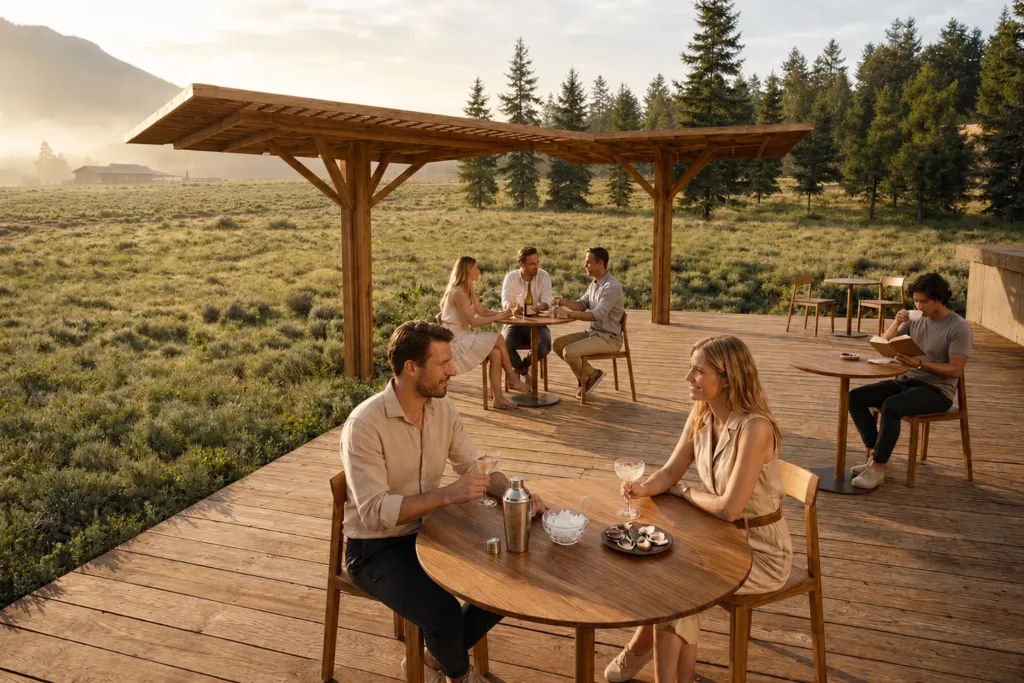
Shade Defines Behaviour
The way shade is designed directly affects how people use a space. Large closed parasols often create isolated islands, standard pergolas can feel visually heavy or too rigid.
When shade is integrated more carefully, it changes behaviour. People stay longer, they move more naturally, they use the space throughout the day, not only during specific hours.
This is particularly important in hotels and resorts, where outdoor areas are part of the commercial experience. The longer guests stay in these spaces, the greater the perceived value of the property.
Sustainability also Influences Perception
Today’s hospitality projects are increasingly expected to be sustainable, but sustainability should not feel like a technical obligation.
When solar integration, passive cooling, and intelligent shading are part of the design language, they improve both performance and perception. Guests notice when a space feels naturally comfortable. They also notice when sustainability is integrated with elegance rather than imposed as visible infrastructure. This creates a stronger sense of quality and trust.
The Problem with Standard Solutions
Many hotels still rely on generic outdoor shading systems:
- Standard parasols
- Heavy pergolas
- Temporary-looking structures
- Visible technical elements
These solutions may solve immediate functional needs, but they rarely create identity. They often make outdoor areas feel interchangeable spaces that could belong anywhere. In hospitality, this is a missed opportunity. Outdoor areas should not feel generic. They should become part of the property’s signature.
Guests spend more time in well-designed outdoor areas because those spaces offer more than comfort. And when shade is designed with architecture in mind, guests do not simply pass through the space. They stay.